Bloated After a Protein Shake? Read Three Lines on the Tub
If your stomach swells an hour after a protein shake, start with the ingredient list. Three lines on the tub tell you most of the story: which whey sits at the top, which sweetener sits near the bottom, and whether the maker added fiber.
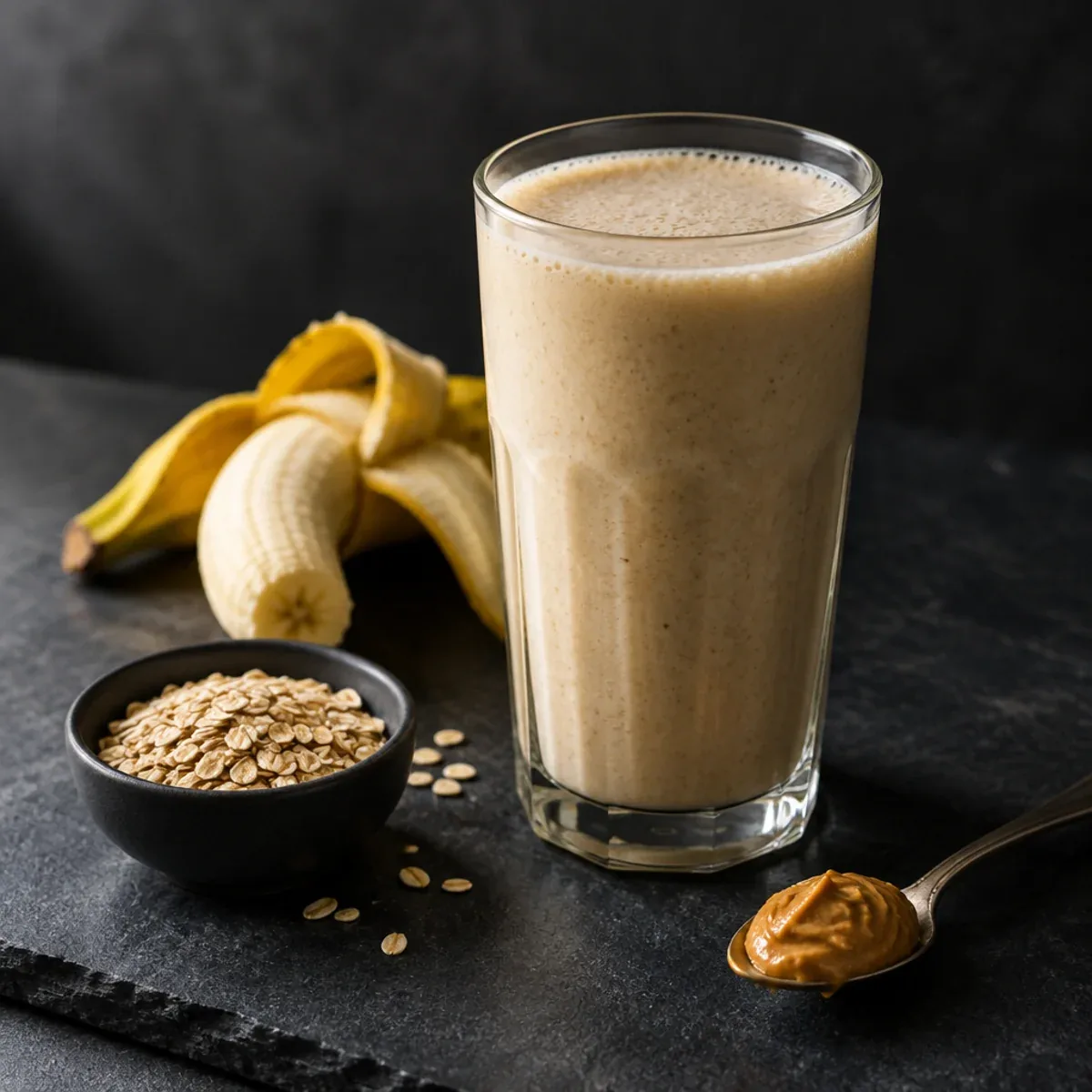
Whey concentrate vs whey isolate: how much lactose is in a scoop?
Whey protein concentrate 80 (WPC80) is at least 80% protein. The American Dairy Products Institute (ADPI) lists its typical lactose at 4 to 10% [1], while the US Dairy Export Council puts it at 4 to 8% [2]. The two sources differ on the top end, so a WPC80 can sit anywhere from 4 to 10% lactose by weight. ADPI lists the lower-protein WPC34 at 48 to 55% lactose [1], so you learn little from the word "concentrate" alone.
Whey protein isolate (WPI) has to reach 90% protein, and both ADPI and the US Dairy Export Council list its typical lactose at 0.5 to 1.0% [3][4]. ADPI sets no hard lactose limit for isolate, so read those figures as typical values [3].
Run the math on 30 grams of the ingredient itself. WPC80 carries about 1.2 to 3 grams of lactose, and WPI carries about 0.15 to 0.3 grams. For scale, the National Institute of Diabetes and Digestive and Kidney Diseases (NIDDK) says many people with lactose intolerance can have 12 grams of lactose, the amount in about 1 cup of milk, without symptoms [5]. NIDDK lists bloating, gas and stomach rumbling among the symptoms and says their strength depends on how much lactose you have [6]. If you mix your shake with a cup of regular milk, the milk adds more lactose than either powder. NIDDK also names whey, milk by-products and dry milk solids as label words that signal lactose [5].
Sugar alcohols: the "-itol" words near the end of the list
Sugar alcohols, also called polyols, can sweeten "zero sugar" powders and bars [7]. The common ones are sorbitol, xylitol, maltitol and erythritol, and you can spot most of them by the "-itol" ending. Isomalt is a sugar alcohol without that ending [7]. Polyols are the P in FODMAP, the group of fermentable carbohydrates that a low-FODMAP diet limits [7].
A systematic review of 79 studies by Lenhart and Chey found that polyols can cause flatulence, abdominal discomfort and laxative effects in a dose-dependent way, in healthy volunteers and in people with IBS [7]. Most healthy people in those studies tolerated about 10 grams of sorbitol per day with mild discomfort, while 20 grams per day can bring abdominal pain and diarrhea [7]. Your gut absorbs polyols less well when you eat more than one at a time [7], which matters for bars that stack two of them or more.
Erythritol behaves in a different way. About 90% of it is absorbed in the small intestine, so less reaches the colon and it produces fewer intestinal symptoms than other polyols [7]. For people with IBS, the same review calls the evidence on polyol malabsorption conflicting [7].
Under FDA rules, a food that could lead you to eat 50 grams of sorbitol in a day must carry the statement "Excess consumption may have a laxative effect" [8]. The sugar alcohol line on the Nutrition Facts panel is voluntary, but a maker who puts a sugar claim on the label, such as "sugar free", has to list it [9]. A tub with no sugar claim can leave that line off.
Added fibers: inulin and chicory root on a protein label
Some powders and bars add fiber to raise the grams on the panel, and inulin is one that food makers add often [11]. Inulin is a chain of fructose units that human enzymes cannot digest, so it passes to the colon, where bacteria ferment it [10]. A 2023 review notes that inulin is left out of the low-FODMAP diet, and that adding it to packaged foods as fiber makes labels harder to read for people who react to it [11].
FDA lists the label names for this group, called inulin-type fructans: inulin, chicory root, chicory root extract, chicory root fiber, inulin from chicory, chicory vegetable fiber, oligofructose and fructooligosaccharide (FOS) [10]. Makers can count inulin toward the dietary fiber grams on the panel [12].
In a controlled trial in healthy adults, flatulence and then bloating were the symptoms people reported most after inulin, and a 10-gram dose of oligofructose raised symptoms well above placebo [13]. In those healthy young adults, doses up to 10 grams of native inulin and up to 5 grams of oligofructose were well tolerated [13]. In an MRI study, a 40-gram inulin drink increased colon volume and gas in people with IBS and in healthy controls, and 13 of 29 people with IBS reached the symptom threshold after inulin, compared with 6 of 29 after glucose [14]. Peak gas levels were similar in both groups, so the researchers concluded that people with IBS who react to inulin are more sensitive to the stretch in the colon [14].
Whey brings no fiber of its own, since the ADPI and US Dairy Export Council composition tables for isolate list no fiber [3][4]. Fiber grams on a whey tub mean the maker added something, so look for the names above.
Gums and the order of a "protein blend"
Gums such as xanthan and guar thicken shakes, and gut bacteria can break down xanthan gum [15]. In one study, 15 grams of xanthan gum per day for 10 days raised stool output and flatulence in healthy volunteers [15]. That dose sits far above what a shake holds, so keep gums lower on your list of suspects.
FDA requires food ingredients to appear in descending order of predominance by weight [16]. A label that reads "protein blend (whey protein concentrate, whey protein isolate)" holds more concentrate than isolate. Ingredients at 2% or less of the weight can sit at the end after a phrase like "Contains 2% or less of" [16], which means a gum or sweetener in that group is present in a small amount.
A powder sold as a dietary supplement can list a "proprietary blend" in descending order by weight, with the blend's total weight and no amount for each ingredient [17]. You learn which protein leads, and you don't learn by how much.
How to read the tub in 20 seconds
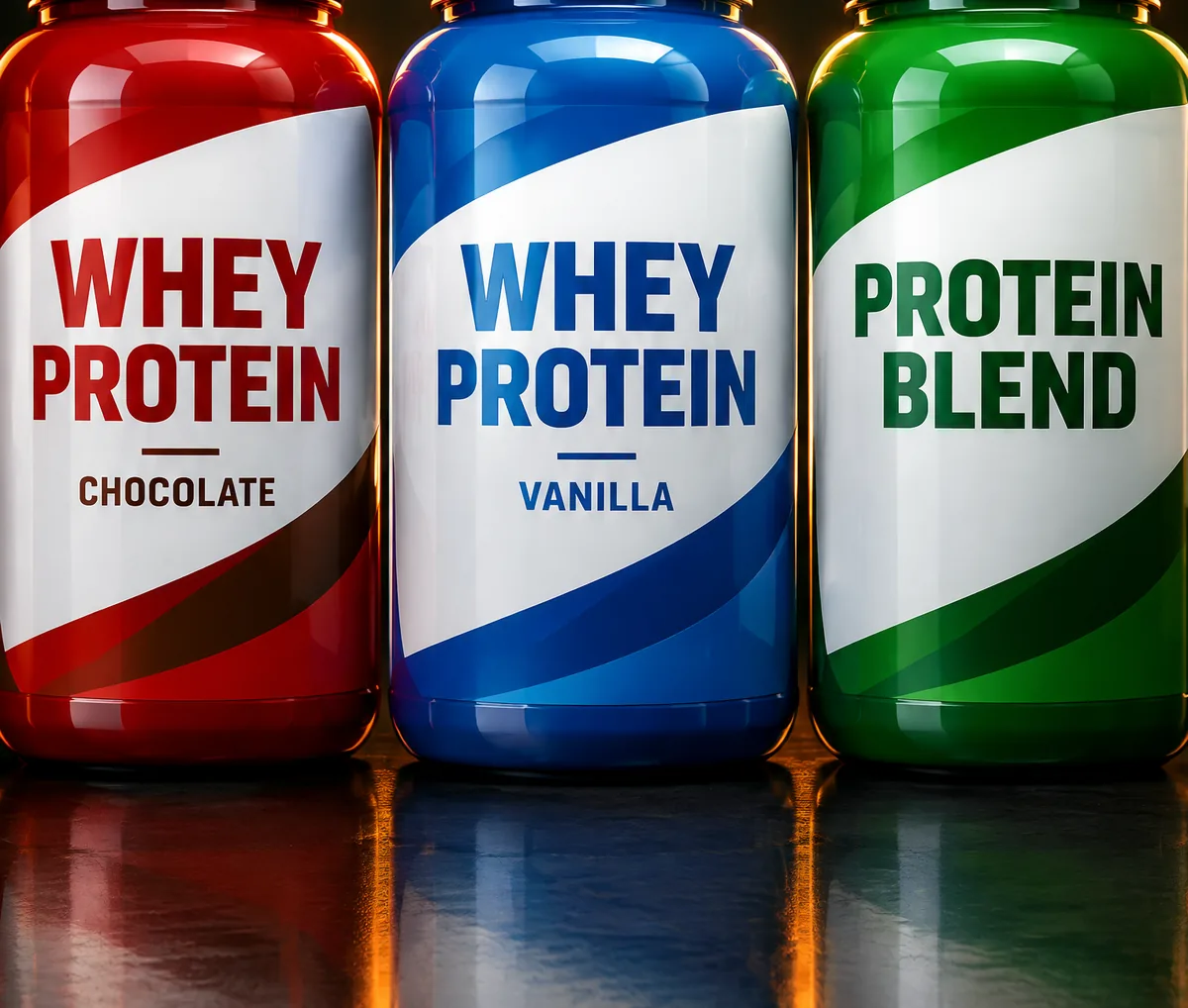
- Read the first ingredient. "Whey protein isolate" in first place means the lowest-lactose form of whey [3][4]. "Whey protein concentrate", or a blend that lists concentrate first, means more lactose [1][16].
- Scan for "-itol" words and isomalt, and look at erythritol on its own [7].
- Scan for inulin, chicory root, oligofructose and FOS [10].
- Check the fiber line. A whey powder with fiber grams has added fiber [3][12].
- Check what you mix it with. A cup of regular milk adds about 12 grams of lactose [5].
The free Label Cheat Sheet puts these words, plus the other ingredients worth checking, in one place for your next trip to the store.
The Iron Gut plans use whey protein isolate in their shakes. If you want your meals and shakes worked out for you, The Build Plan and The Lean Plan are low-FODMAP, gluten-free meal plans for people who train.
If bloating keeps coming back, see your doctor about it.
Protein shake bloating FAQ
Why do I get bloated after a protein shake?
Some people report bloating from the lactose in whey concentrate, from sugar alcohols, or from added fibers like inulin [6][7][13].
Does whey protein isolate have lactose?
Whey isolate still contains a small amount of lactose. ADPI and the US Dairy Export Council list it at 0.5 to 1.0%, which works out to about 0.15 to 0.3 grams in 30 grams of isolate [3][4].
Can creatine make you bloated?
In a trial of 59 soccer players, a single 10-gram dose of creatine led to more diarrhea than two 5-gram doses (55.6% vs 28.6%), and the split dose showed no difference from placebo [18]. The complaints reported most in that study were diarrhea, stomach upset and belching, and 35% of the placebo group reported diarrhea as well [18].
Read any label in 20 seconds
The free Label Cheat Sheet shows the six words to scan for on a food label, and what to buy instead.
Get the free cheat sheetSee the meal plansSources
- American Dairy Products Institute. Whey Protein Concentrate (WPC) Standard (2022). https://www.adpi.org/wp-content/uploads/2022/07/Whey-Protein-Concentrate-Standard_2022.pdf
- US Dairy Export Council (ThinkUSAdairy). WPC 80: typical composition. https://thinkusadairy.org/products/whey-protein-and-ingredients/whey-categories/wpc-80
- American Dairy Products Institute. Whey Protein Isolate (WPI) Standard v4.0 (2023). https://www.adpi.org/wp-content/uploads/2023/07/WPI-Standard-v4.0_2023.pdf
- US Dairy Export Council (ThinkUSAdairy). WPI: typical composition. https://thinkusadairy.org/products/whey-protein-and-ingredients/whey-categories/wpi
- NIDDK. Eating, Diet, and Nutrition for Lactose Intolerance. https://www.niddk.nih.gov/health-information/digestive-diseases/lactose-intolerance/eating-diet-nutrition
- NIDDK. Symptoms and Causes of Lactose Intolerance. https://www.niddk.nih.gov/health-information/digestive-diseases/lactose-intolerance/symptoms-causes
- Lenhart A, Chey WD. A Systematic Review of the Effects of Polyols on Gastrointestinal Health and Irritable Bowel Syndrome. Adv Nutr. 2017;8(4):587-596. https://doi.org/10.3945/an.117.015560
- 21 CFR 184.1835, Sorbitol. https://www.ecfr.gov/current/title-21/chapter-I/subchapter-B/part-184/subpart-B/section-184.1835
- 21 CFR 101.9(c)(6)(iv), Sugar alcohol. https://www.ecfr.gov/current/title-21/chapter-I/subchapter-B/part-101/subpart-A/section-101.9
- FDA. Review of the Scientific Evidence on the Physiological Effects of Certain Non-Digestible Carbohydrates (June 2018). https://www.fda.gov/files/food/published/Review-of-the-Scientific-Evidence-on-the-Physiological-Effects-of-Certain-Non-Digestible-Carbohydrates-PDF.pdf
- Stribling P, Ibrahim F. Dietary fibre definition revisited: the case of low molecular weight carbohydrates. Clin Nutr ESPEN. 2023;55:340-356. https://doi.org/10.1016/j.clnesp.2023.04.014
- FDA. Guidance for Industry: The Declaration of Certain Isolated or Synthetic Non-Digestible Carbohydrates as Dietary Fiber on Nutrition and Supplement Facts Labels (2018). https://www.fda.gov/regulatory-information/search-fda-guidance-documents/guidance-industry-declaration-certain-isolated-or-synthetic-non-digestible-carbohydrates-dietary
- Bonnema AL, Kolberg LW, Thomas W, Slavin JL. Gastrointestinal tolerance of chicory inulin products. J Am Diet Assoc. 2010;110(6):865-868. https://doi.org/10.1016/j.jada.2010.03.025
- Major G, Pritchard S, Murray K, et al. Colon Hypersensitivity to Distension, Rather Than Excessive Gas Production, Produces Carbohydrate-Related Symptoms in Individuals With Irritable Bowel Syndrome. Gastroenterology. 2017;152(1):124-133. https://doi.org/10.1053/j.gastro.2016.09.062
- Daly J, Tomlin J, Read NW. The effect of feeding xanthan gum on colonic function in man. Br J Nutr. 1993;69(3):897-902. https://doi.org/10.1079/bjn19930089
- 21 CFR 101.4(a), Food; designation of ingredients. https://www.ecfr.gov/current/title-21/chapter-I/subchapter-B/part-101/subpart-A/section-101.4
- 21 CFR 101.36(c), Nutrition labeling of dietary supplements (proprietary blends). https://www.ecfr.gov/current/title-21/chapter-I/subchapter-B/part-101/subpart-C/section-101.36
- Ostojic SM, Ahmetovic Z. Gastrointestinal distress after creatine supplementation in athletes: are side effects dose dependent? Res Sports Med. 2008;16(1):15-22. https://doi.org/10.1080/15438620701693280